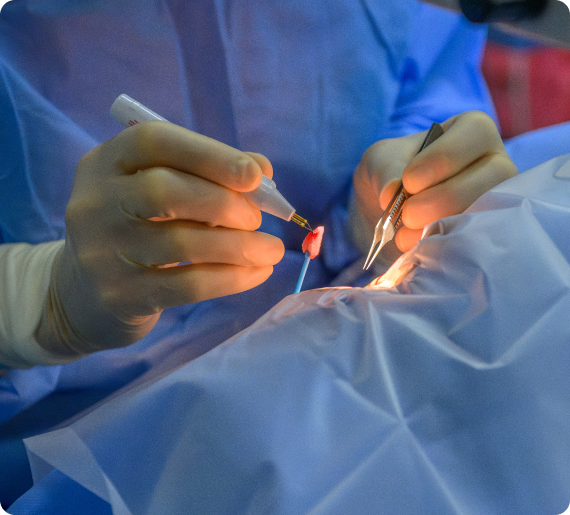
A corneal transplant can restore vision and relieve discomfort caused by damaged or diseased corneas. Our skilled surgeons use advanced techniques to improve your eye health and visual clarity.
A corneal transplant involves replacing a damaged or diseased cornea with a healthy donor cornea. This procedure is often necessary when vision is significantly impaired due to conditions like keratoconus, corneal scarring, or trauma.
Our skilled surgeons use advanced techniques to ensure the procedure is as comfortable as possible, with a focus on helping you achieve the best possible recovery and improved vision.
When to consider a corneal transplant?
You may need a corneal transplant if you experience:
Blurred or distorted vision
Increased sensitivity to light or glare
Eye pain or discomfort from scarring
Reduced vision that doesn’t improve with glasses or contacts
Corneal diseases or injuries that affect your eye health
If your vision is impaired and other treatments are ineffective, a corneal transplant could be the solution.
Corneal transplant techniques
Corneal transplantation can restore or improve vision by replacing damaged or diseased corneal tissue. Our surgeons use the following advanced techniques, tailored to each patient’s needs:
Penetrating Keratoplasty (PKP)
A full-thickness corneal transplant where the entire damaged cornea is replaced with a donor graft to restore clarity and vision.
An advanced minimally invasive technique that replaces only the innermost corneal membrane for quicker healing and minimal visual distortion.
Deep Anterior Lamellar Keratoplasty (DALK)
Used when the corneal endothelium is healthy, this technique preserves the inner layers while replacing the outer corneal tissue, thereby reducing the risk of rejection.
For surface scarring or early disease, this procedure removes superficial corneal layers to improve clarity without full transplantation.
Alternative vision correction options
If your cornea is healthy but your vision needs correction, our specialists offer several advanced procedures to help you see more clearly without full corneal surgery.
PRK (Photorefractive Keratectomy): Reshapes the cornea by removing the surface layer before laser correction.
Femto LASIK: A bladeless LASIK procedure using a femtosecond laser (e.g. Ziemer Z8) for precise flap creation.
CLEAR (Corneal Lenticule Extraction for Advanced Refractive Correction): A flapless, minimally invasive femtosecond laser treatment for myopia and astigmatism.
Phakic Intraocular Lens (ICL): An implantable contact lens placed behind the iris to correct high myopia or astigmatism.
Implantable Phakic Contact Lens (IPCL): Similar to the ICL, used for moderate to high myopia where laser surgery isn’t suitable.
Our approach to corneal transplants at Sandhurst Eye Centre
We perform transplants with the latest techniques and state-of-the-art equipment to provide the best possible outcomes.
Comprehensive assessment of the corneal damage
Advanced surgical techniques to carefully transplant the donor cornea
Post-surgery aftercare and guidance to support the healing process
What to expect on your corneal transplant treatment journey?
Here’s what the corneal transplant surgery process typically looks like. We’ll walk you through each stage of your treatment so you know exactly what to expect, with personalised care and support before, during, and after your procedure.
Initial Consultation
Your specialist will assess the condition of your cornea, review your medical history, and discuss your treatment options, including the benefits of a corneal transplant.
Day of Surgery
The procedure is performed under local anaesthesia and takes approximately 1-2 hours. Most patients go home the same day, with a clear aftercare plan provided
Aftercare and Recovery
After surgery, you’ll need to follow a strict aftercare regimen, including using eye drops, wearing an eye shield at night, and attending follow-up appointments to monitor progress.
The procedure is performed under local anaesthesia, so you won’t feel pain during surgery. After surgery, some discomfort or mild irritation may occur, but this is managed with medication.
Recovery typically takes a few months. Initial healing may take several weeks, but full visual recovery can take 6 to 12 months, depending on the type of transplant and the healing process.
After a corneal transplant, many patients experience significant improvements in vision, but glasses may still be required for reading or fine detail, depending on the extent of the transplant and any underlying conditions.
Why choose us
Highly experienced surgeons
Over 20 years of expertise in cataract, refractive laser, oculoplastic, corneal transplant and retinal surgeries.
State-of-the-art technology
Modern diagnostic & surgical equipment for precise treatment.
Accredited and trusted care
Our centre meets the highest medical standards, backed by industry accreditations and a reputation for excellence in ophthalmic care.
Holistic eye care under one roof
From diagnostics to surgery and post-operative care, we offer a full range of services to make your experience as comfortable as possible.
What our patients say
"Excellent and friendly staff aiming to make their patients feel comfortable and welcome. There was an atmosphere of tranquility and peace throughout my stay. I highly recommend the Sandhurst Eye Clinic and special thanks goes out to Dr. Lamprecht for his excellence."
"Wow, Dr Van Onselen is such an amazing Dr, he took all the efforts to ensure that my Dad gains back his sight. I am very happy, the staff is so friendly. I recommend this institution as the most wonderful one ever!!!"
"From the warm welcome at reception to the professional care throughout my cataract surgery, every step was exceptional. My doctor even called to check on me after the procedure—such a thoughtful touch. I highly recommend Sandhurst Eye Centre to anyone in need of eye care."
"In a word, Excellent! Lovely people, thorough, great explanation of my condition and treatment path, and seamlessly managed reimbursement requirements. A pleasure going there!"
"Thorough examinations, clear explanations, exceptional care. The clinic's efficient operations and welcoming atmosphere further enhance the overall experience. I highly recommend them for anyone seeking top-notch eye care in South Africa."
Concerned about vision loss or corneal damage?
Our team is here to help. Book a consultation to find out if corneal transplant is the right treatment for you.